Ten years ago you could rank with one good article per keyword. Today Google increasingly rewards sites that demonstrate command of an entire topic. That shift has a practical answer: content clusters. Organize what you publish around topics instead of scattered keywords, and every article strengthens the others.
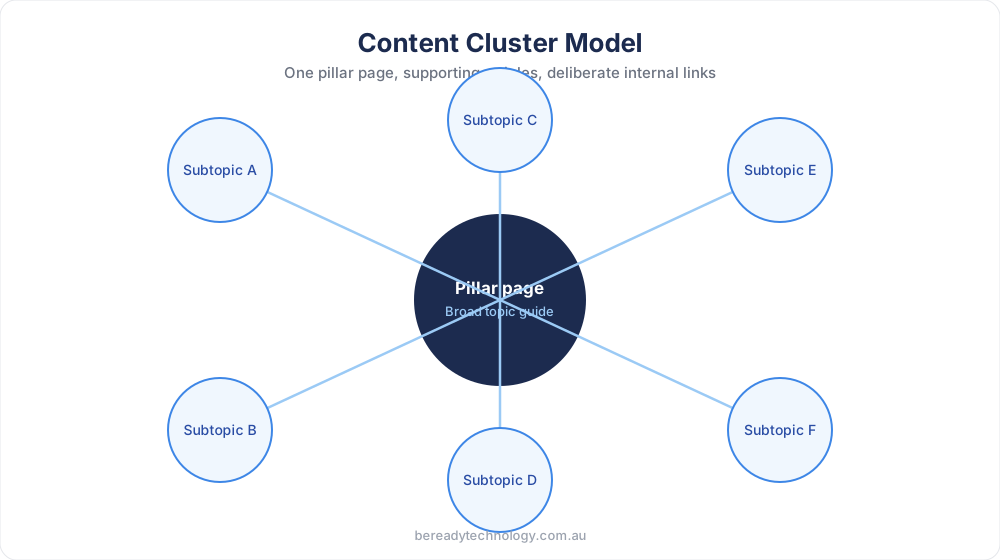
The model in one picture
A cluster has three parts. The pillar page is a comprehensive guide to the broad topic, targeting the big head keyword. Cluster articles each cover one subtopic in depth, targeting long-tail keywords. Internal links connect every cluster article to the pillar and to each other, so relevance and authority flow through the whole group.
Why it works
- Topical authority: covering a subject completely signals expertise for the entire keyword family, lifting every page in the cluster.
- Long-tail economics: subtopic articles win low-competition keywords quickly, and their internal links push the pillar up for the hard head term.
- User journeys: readers move naturally between related articles, which improves engagement signals and multiplies pages per visit.
- No cannibalization: with one page per subtopic, your own articles stop competing against each other.
Building your first cluster
1. Choose a topic you can own
Pick the subject closest to your revenue where you have real expertise. A commercial cleaning company owns "office cleaning", not "cleaning" in general.
2. Map the subtopics
Run the keyword process from our Keyword Research Step by Step: From Seed Ideas to Content Plan and group the results. Questions, comparisons, costs, how-tos and mistakes are natural cluster articles. Eight to fifteen subtopics per pillar is a healthy size.
3. Publish in the right order
Write the pillar first as a strong overview, then release cluster articles steadily, linking each back to the pillar with descriptive anchors and forward to sibling articles where relevant. Update the pillar as clusters grow, it should always reflect your full coverage.
4. Wire the links deliberately
Internal linking is where clusters are won or lost. Every cluster article links to the pillar; the pillar links to every cluster article; siblings cross-link where readers genuinely benefit. Our Internal Linking: The Most Underrated Lever in SEO covers anchor text and structure in detail.
Measuring cluster performance
Judge the cluster, not just single pages: total keywords ranking across the group, combined organic traffic, and movement of the pillar's head keyword. Track the full keyword family in Service Hub 247 grouped as one project, and you will see a characteristic pattern: cluster articles rank first, then months later the pillar climbs as the whole structure gains trust. That is topical authority becoming visible.