Write about the wrong topics and even brilliant content earns nothing. Keyword research is the discipline that prevents that waste: it tells you what your customers actually type into Google, how many of them do it, and how hard each phrase is to win. Here is the exact five-step process we use for client projects.
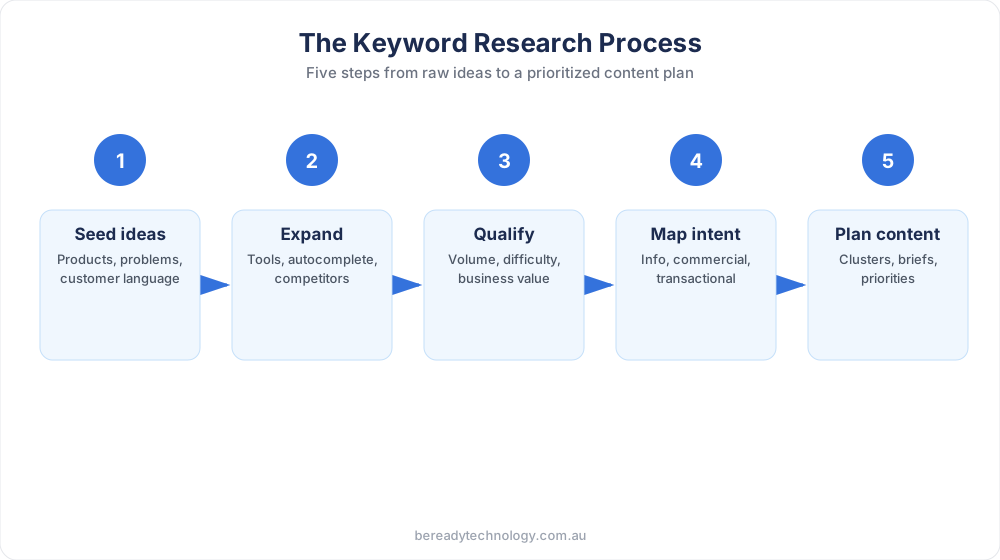
Step 1: Collect seed ideas
Start from your business, not from tools. List your products and services, the problems they solve, and the exact words customers use in emails, reviews and sales calls. Ten to twenty seed phrases are enough. A hosting company might start with "web hosting", "website down", "move my website" and "hosting for WordPress".
Step 2: Expand the list
Feed the seeds into expansion sources: Google Autocomplete, People Also Ask boxes, related searches, and keyword tools. Then mine your competitors: any keyword a rival ranks for that you do not is a candidate. Do not filter yet, volume matters later. A healthy expansion produces several hundred raw phrases.
Step 3: Qualify with data
Now cut aggressively using three lenses:
- Search volume: enough people must actually search it. But do not worship big numbers, a keyword with 90 searches a month and perfect buyer intent beats a vanity phrase with 10,000.
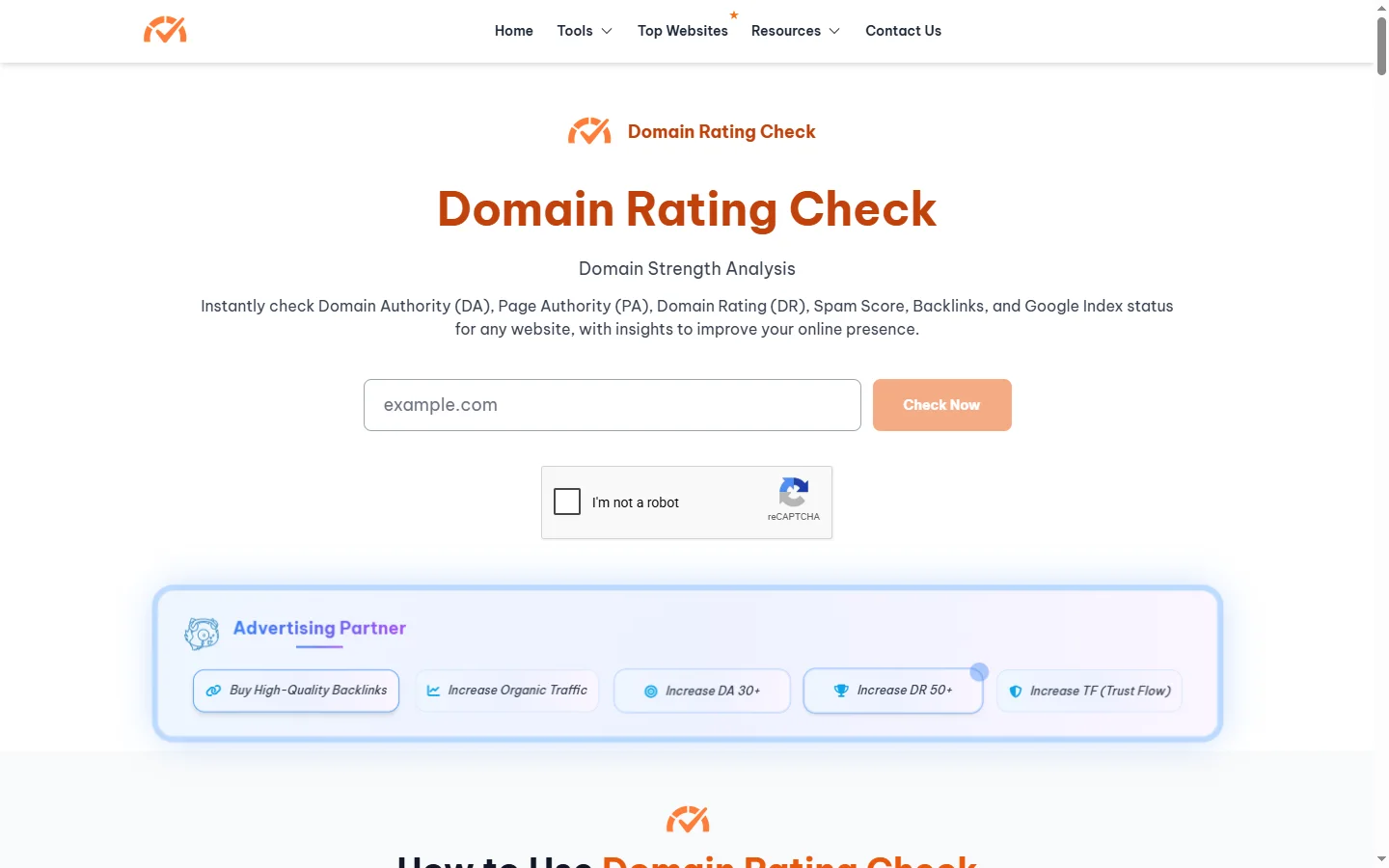
- Difficulty: check who ranks today. If page one is all DR 70+ giants, a young site should look for a longer-tail variation first. A quick check with Domain Rating Check tells you if the field is out of your league.
- Business value: would a visitor from this keyword ever pay you? "Free logo maker" brings crowds that convert at zero.
Step 4: Map search intent
Every keyword hides an intent: informational ("what is domain rating"), commercial ("best rank tracker for agencies"), or transactional ("service hub 247 pricing"). Match the format Google already rewards: if page one is all listicles, do not submit a product page. Intent mismatch is the most common reason decent content never ranks.
Step 5: Turn keywords into a content plan
Group related keywords into clusters, one cluster equals one page, and organize clusters around pillar topics as we describe in Content Clusters: How Topical Authority Wins Rankings. Then prioritize by a simple score: value first, difficulty second, volume third. The output is a publishing queue where every planned article has a keyword target, an intent and an expected business outcome.
Keep the loop running
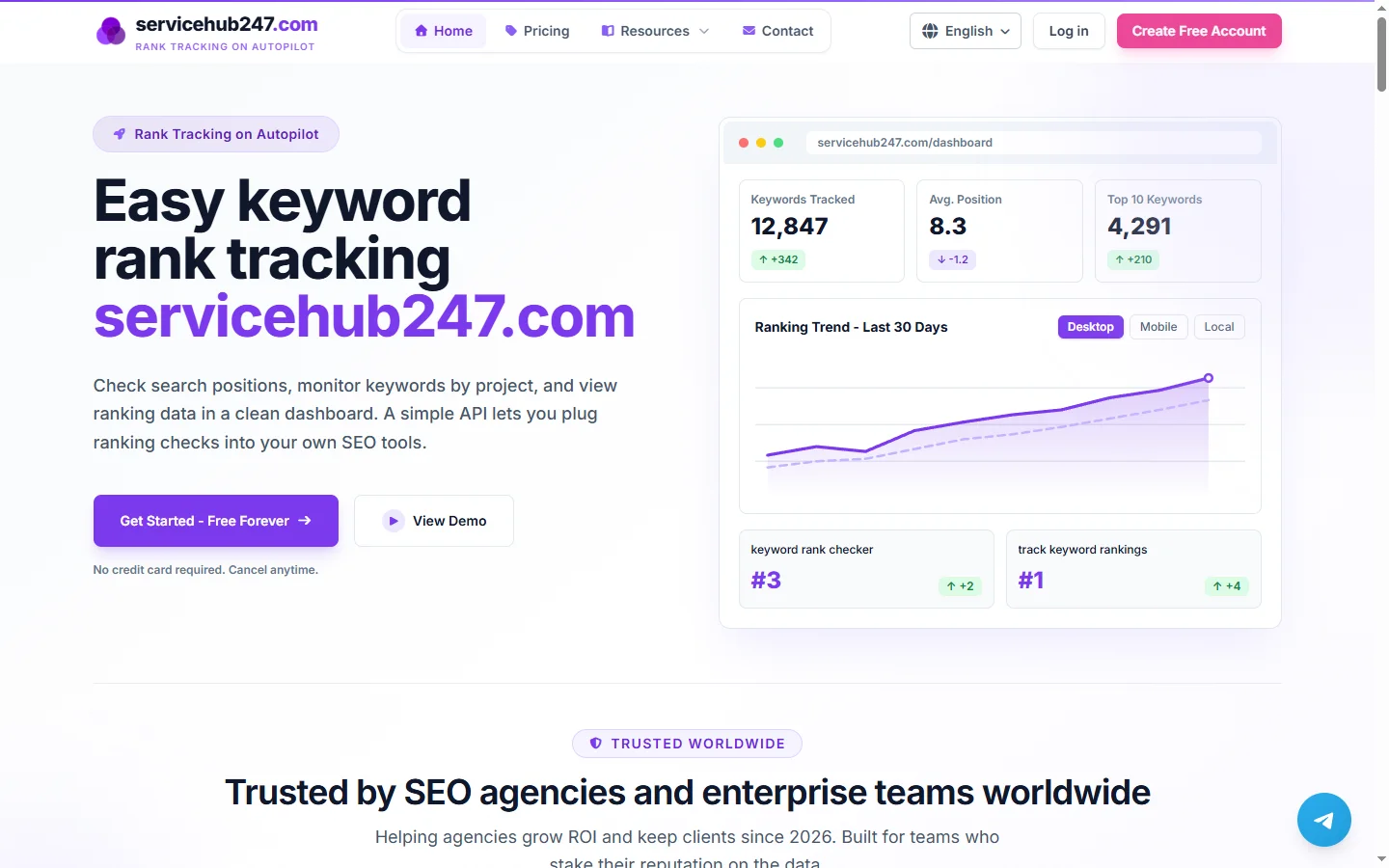
Keyword research is not a one-time project. Rankings shift, competitors publish and new phrases appear. Re-run the process quarterly, and track your target keywords daily with a tool like Service Hub 247 so you see which bets are paying off. Research tells you where to aim, tracking tells you whether you hit.