Great content on a technically broken site is a billboard in a basement. Technical SEO makes sure search engines can find, read and trust your pages. This framework takes you through an audit in five layers, ordered so the most damaging problems surface first.
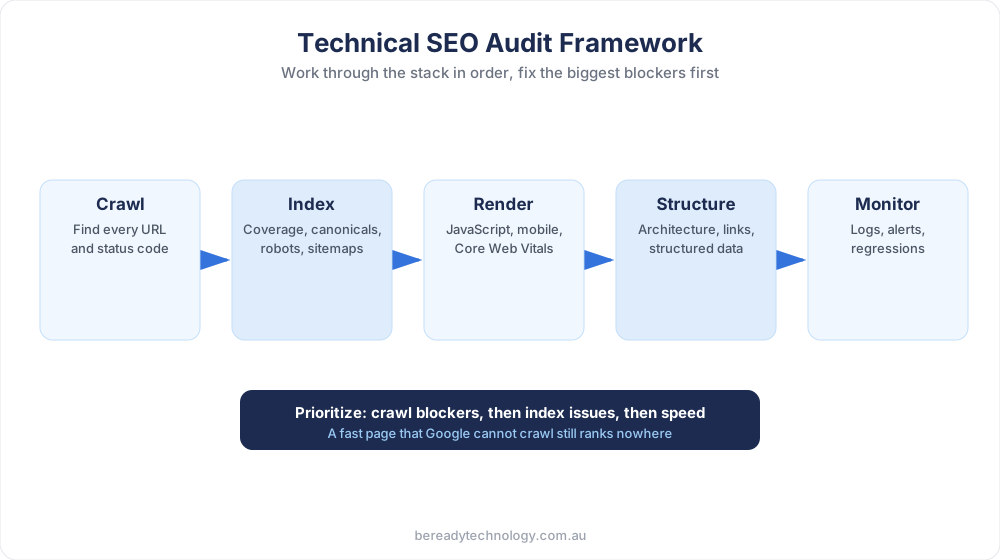
Layer 1: Crawling
Can bots reach every page that matters? Crawl your site with a tool like Screaming Frog and compare the result against your sitemap. Look for:
- Pages blocked by robots.txt by accident
- Redirect chains and loops
- Broken internal links returning 404
- Important pages more than 3 clicks from the homepage
Layer 2: Indexation
Crawled does not mean indexed. In Google Search Console, the Pages report shows what made it into the index and why the rest did not. The usual suspects: rogue noindex tags left from staging, canonical tags pointing to the wrong URL, duplicate content splitting signals, and thin pages Google chose to ignore. Every important page should be indexed; everything else should be deliberately excluded, not accidentally included.
Layer 3: Rendering and speed
Google renders pages like a browser. If your content only appears after heavy JavaScript execution, verify it actually shows up in the rendered HTML. This layer also covers Core Web Vitals: loading speed, interactivity and layout stability. We dedicated a full article to it in Core Web Vitals: Why Page Speed Matters for SEO and Revenue, because speed issues are both common and fixable.
Layer 4: Structure and data
Now look at how the site communicates meaning:
- Architecture: related content grouped logically, clean URL hierarchy.
- Internal linking: authority flowing to the pages that earn money, no orphans.
- Structured data: valid schema for articles, products, organization and breadcrumbs.
- Hreflang if you serve multiple languages, a frequent source of silent errors on bilingual sites.
Layer 5: Monitoring
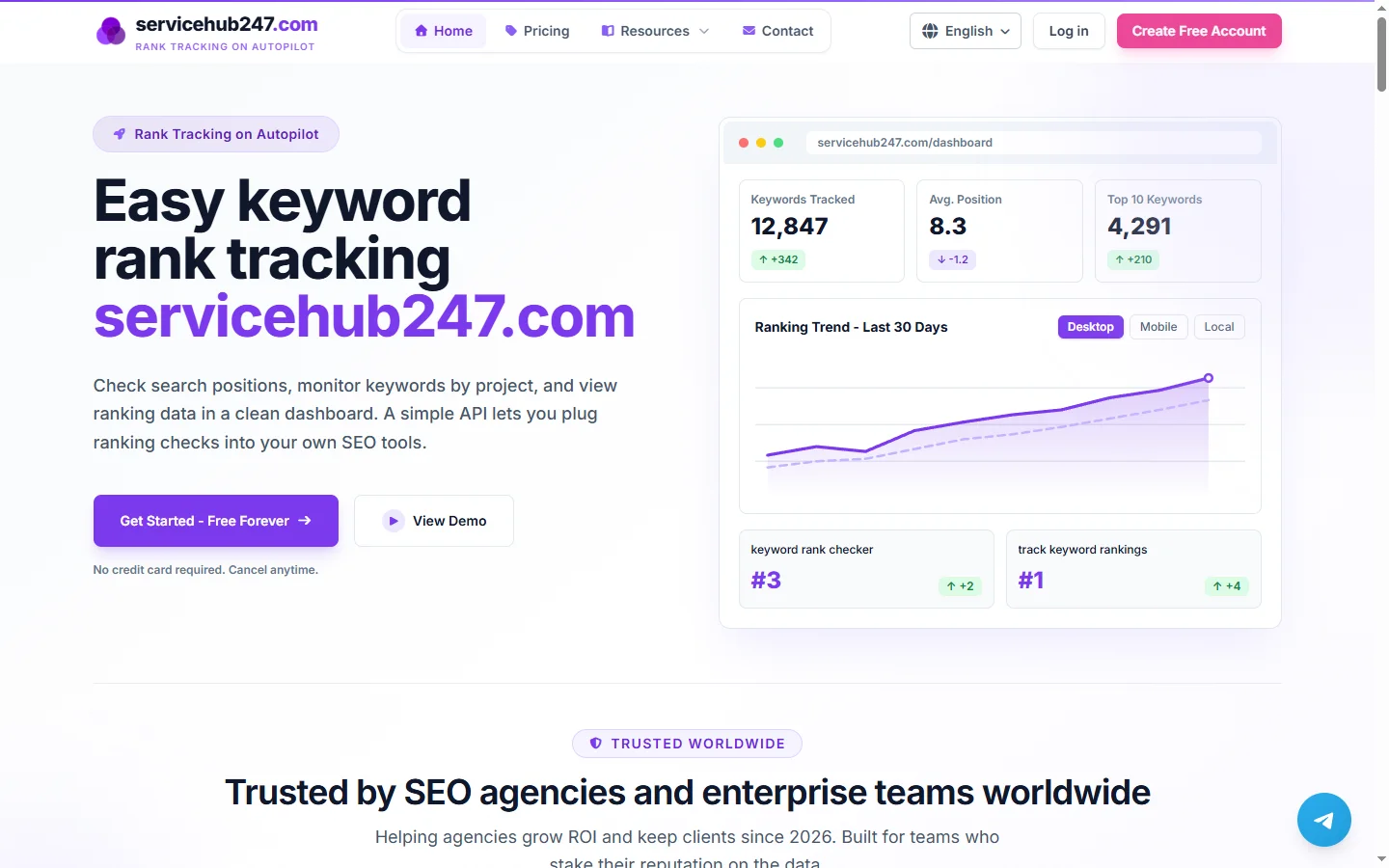
An audit is a snapshot; websites decay. Set up ongoing checks: Search Console alerts, scheduled crawls, uptime monitoring and daily rank tracking with a tool like Service Hub 247. A sudden ranking drop across many keywords is often the first visible symptom of a technical regression, catching it in days instead of months protects your traffic.
Prioritizing the fixes
Not all findings deserve equal urgency. Fix in this order: crawl blockers first (nothing else matters if bots cannot get in), then indexation problems, then speed, then structural improvements. A fast page that Google cannot crawl still ranks nowhere.
How often should you audit?
A full audit twice a year, a light check monthly, and always after a redesign, migration or CMS change. Migrations without an SEO checklist are the most common cause of catastrophic traffic loss we see. If you have inherited a site that never had a technical review, get in touch, a one-time cleanup often unlocks rankings the content earned long ago.