When someone searches "plumber near me" or "coffee shop Melbourne", the three businesses in Google's map pack capture most of the clicks before regular results even get a look. For local businesses, that box is the most valuable real estate on the internet, and it is winnable with focused work on four levers.
How Google ranks local results
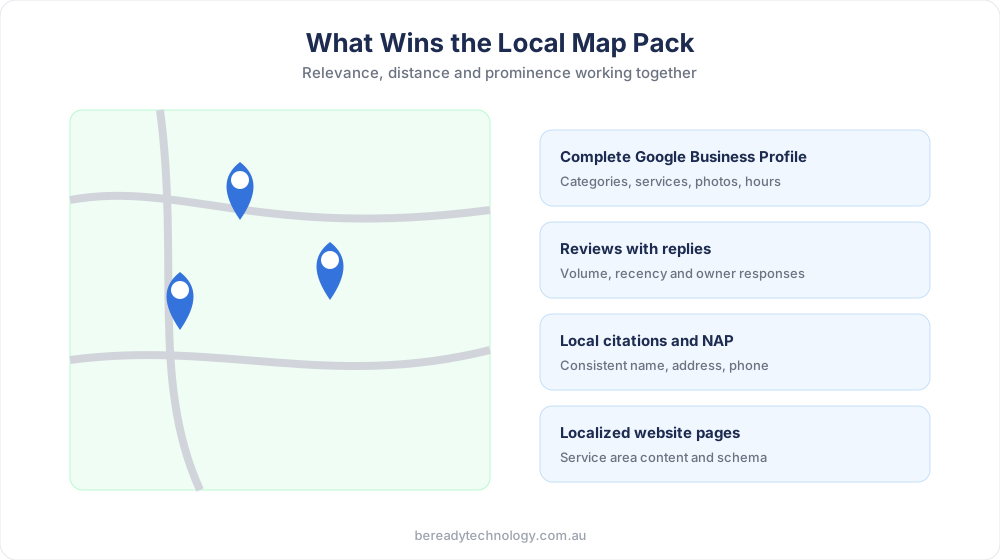
Local rankings balance three factors. Relevance: how well your profile matches the search. Distance: how close you are to the searcher. Prominence: how well-known and well-reviewed your business is. You cannot move your shop, but relevance and prominence are fully in your control.
Lever 1: A complete Google Business Profile
Your GBP is the new homepage for local customers. Complete every field: primary and secondary categories, services with descriptions, opening hours, attributes and, critically, photos. Add new photos monthly; profiles with fresh images get measurably more direction requests and calls. Post updates and offers, the activity itself is a freshness signal.
Lever 2: Reviews with responses
Reviews drive both rankings and conversions. Build a simple system:
- Ask every happy customer at the moment of satisfaction, with a direct link or QR code.
- Reply to every review, positive or negative, within days. Responses show Google an active business and show customers you care.
- Never buy reviews. Filters catch patterns, and the penalty outlasts the gain.
Lever 3: Citations and NAP consistency
Your business name, address and phone number must be identical everywhere: website, GBP, directories, social profiles. Conflicting data erodes trust in your listing. List in the directories that matter for your country and industry, then stop; a hundred junk citations help nobody.
Lever 4: Localized website content
Your website still powers the map pack from behind. Build a dedicated page per service and per area you serve, with LocalBusiness schema markup, embedded map and genuinely local content: projects, customer stories, area-specific advice. Thin doorway pages with a city name swapped in do not count and can hurt; the fundamentals in our On-Page SEO Checklist: 12 Elements to Optimize on Every Page apply to every local page too.
Measure like a local
Track three things monthly: your map pack positions for money keywords, GBP insights (calls, direction requests, website clicks) and review velocity. Rankings for local terms can differ street by street, so track from your service area. A rank tracker with local support such as Service Hub 247 keeps the picture honest.
The 90-day local sprint
- Weeks 1 to 2: complete your GBP, fix NAP inconsistencies.
- Weeks 3 to 6: launch the review system, publish service pages with schema.
- Weeks 7 to 12: add area content, earn 3 to 5 local links (chamber, sponsors, suppliers).
Most local competitors do none of this consistently. Ninety days of focus is often enough to enter the pack, and once there, the compounding begins.