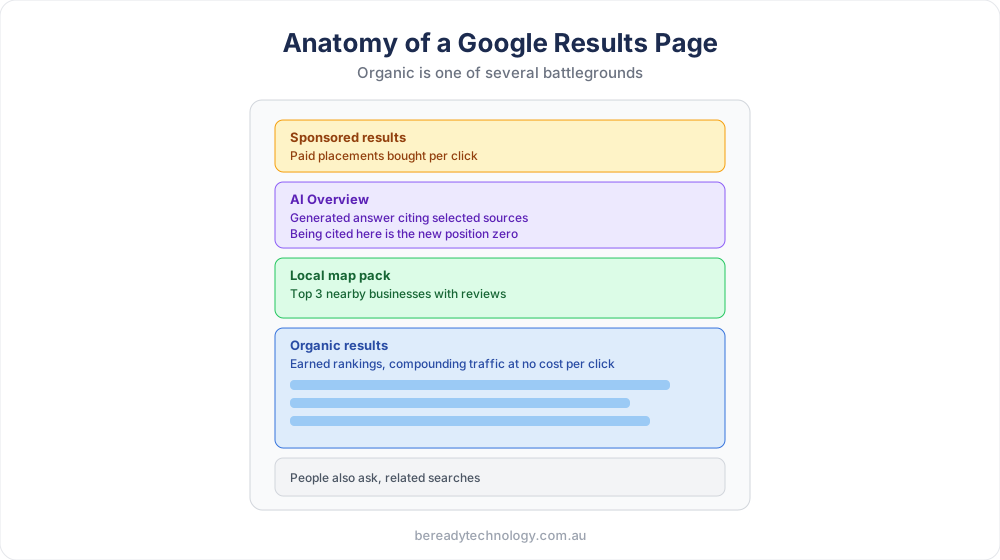
Search is going through its biggest shift since mobile. AI Overviews sit on top of Google results, chat assistants answer questions directly, and "position zero" now means being the source an AI cites. Panic sells newsletters, but the practical reality is more nuanced: the fundamentals still decide who gets cited, and the winners are adapting rather than starting over.
What actually changed
- AI Overviews answer many informational queries directly on the results page, citing a handful of sources. Clicks concentrate on those citations.
- Answer engines like ChatGPT and Perplexity have become a real discovery channel, with their own citation patterns.
- Zero-click growth: simple factual queries increasingly end without a website visit at all.
What did not change
AI systems learn from and cite the open web. To be the answer, you still need to be crawlable, authoritative and genuinely useful, exactly the qualities classic SEO builds. Transactional and local intent still ends on websites: nobody buys hosting or books a dentist inside an AI summary. And trust signals matter more than ever, because AI systems preferentially cite sources that look like authorities; everything in our E-E-A-T Explained: How to Build Trust Signals Google Rewards guide applies double.
The strategy that wins both worlds
1. Target intent AI cannot satisfy
Comparisons with real experience, current data, local knowledge, tools and calculators, original research. Content that exists nowhere else cannot be summarized away, it can only be cited.
2. Structure content to be citable
Clear questions as headings, direct answers in the first sentences, tables and lists, valid schema markup. The easier a passage is to extract, the more often it gets quoted, by Google and by chatbots alike.
3. Build a brand people search for
Branded search is AI-proof: someone typing your product's name wants you, not a summary. Product-led content, community presence and digital PR grow that moat.
4. Double down on transactional pages
As informational clicks thin out, the pages that convert deserve more of your optimization budget. The basics in our On-Page SEO Checklist: 12 Elements to Optimize on Every Page matter most exactly there.
Measure what changes
Watch impressions versus clicks in Search Console (AI Overviews often raise the first and lower the second), track branded search growth, and keep daily eyes on your money keywords with a tracker like Service Hub 247. Volatility during AI rollouts is normal; trends across weeks are the signal.
The honest conclusion
AI search punishes commodity content and rewards genuine expertise with distribution. If your strategy was rewriting what already ranks, that era is closing. If you build real authority around real products and experience, AI systems become another channel that recommends you. That has been our bet at Be Ready Technology, and so far the results agree.